CNC machining design guide
Design decisions that make CNC parts easier to manufacture
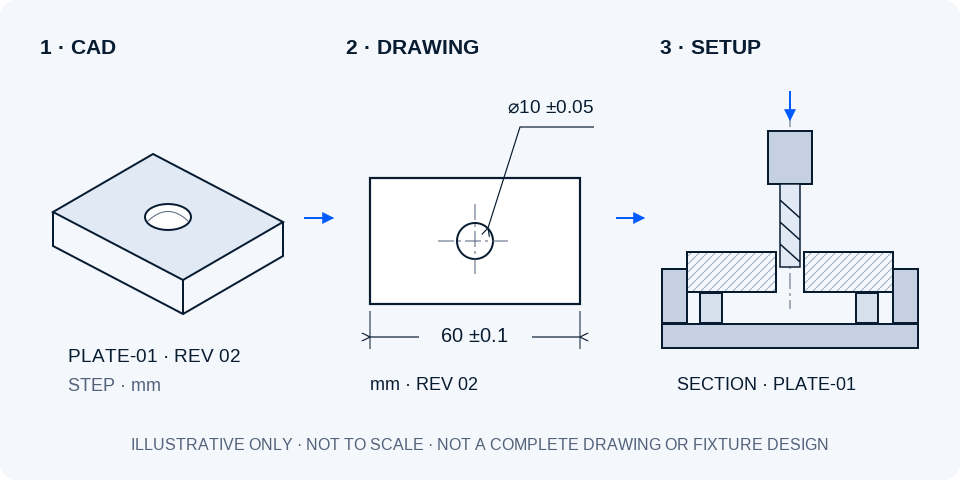
A solid 3D model defines nominal geometry; a drawing communicates requirements that geometry alone cannot describe.
Start with how the part must work: where it locates, what it carries, which surfaces mate, and what must be inspected. Then choose geometry and requirements that support that function. This guide explains common machining tradeoffs so you can prepare a clear quotation package and discuss useful changes before production.
Files and quotation checklist
Supply a solid CAD model such as STEP and a readable dimensioned drawing for each part. Identify units, part number and revision consistently across both files. A model describes nominal shape; it does not reliably communicate every thread, fit, cosmetic requirement or inspection condition. If model and drawing disagree, identify which requirement governs before machining begins.
Separate functional requirements from preferences. A sealing face may need controlled flatness and texture, while a hidden relief pocket may only need clearance. Mark features that can change after discussion and those fixed by an existing assembly. Include mating-part information or a simple assembly view when a dimension alone does not explain why a feature matters.
- Material grade, temper or condition; supplied stock or material certification requirements.
- Quantity, prototype or repeat production, target date and supplied mating components.
- Threads, datums, critical fits, tolerances, surface texture, deburring and edge requirements.
- Heat treatment and coating sequence, masked areas, cosmetic faces and packaging.
- Inspection characteristics, measurement condition, sampling and required reports.
ASME: communicating drawing requirements with GD&T
Geometry, rigidity and workholding
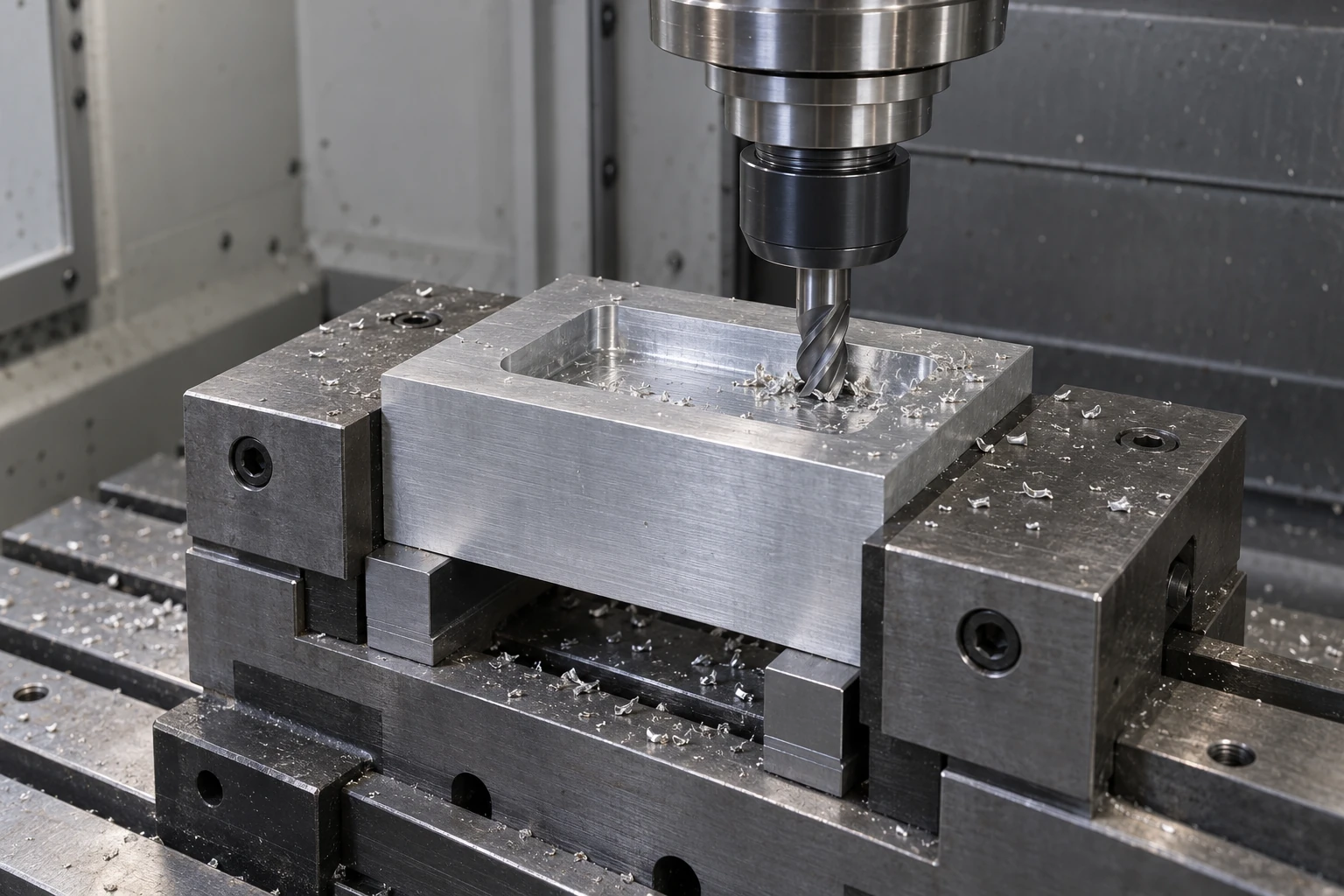
Consider tool access and how the part is supported throughout the cut, not only the final shape. These design reviews connect thin features and deep pockets to fixturing, distortion and vibration.
Holes, threads and tolerances
Specify the feature that the assembly actually needs. Hole depth, full-thread engagement, size, position and inspection conditions describe different requirements.
3-axis, 5-axis, EDM and grinding
Choose a process because it solves a specific access, material or surface requirement. Review combinations of operations and confirm the route for the actual part.
Surface finishes and coatings
Plan the supplied surface and final dimensions before machining. Coating, preparation, masking and cosmetic acceptance belong in the same project discussion.