Surface finishes and coatings
Plan the supplied surface and final dimensions before machining. Coating, preparation, masking and cosmetic acceptance belong in the same project discussion.
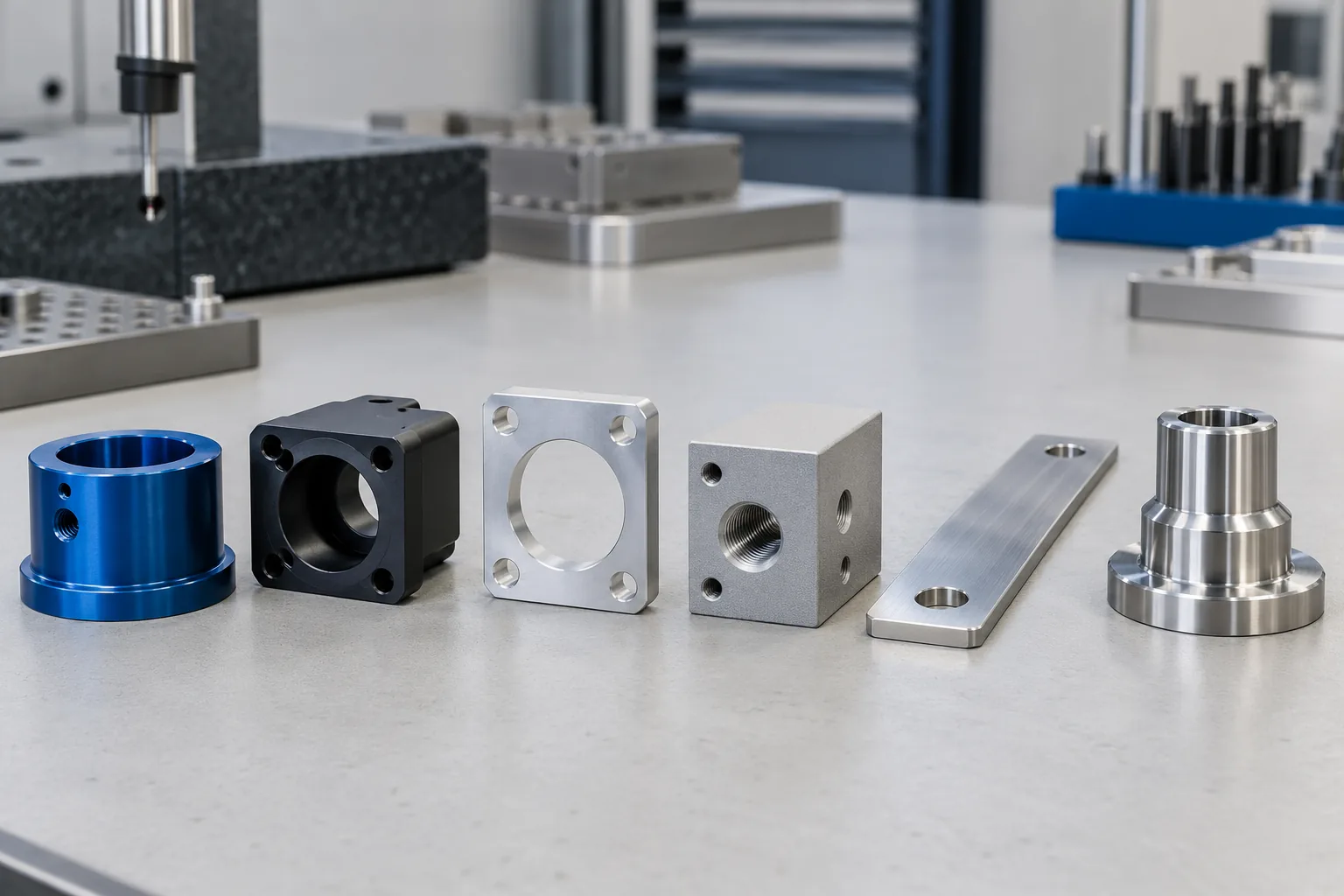
Finishing and anodizing: design the final condition
Specify the coating type, thickness, colour, pretreatment and acceptance condition. Mark cosmetic faces, masking, electrical contacts, threads and mating fits. Brushing or polishing can change edges and dimensions, while an anodized result depends on alloy and prior surface preparation. Agree the required appearance with a sample or reference where it matters, rather than assuming that a colour name defines a complete finish.
Anodic coating thickness includes both converted base material and outward growth. The Aluminum Anodizers Council gives approximately half penetration and half buildup as generally accepted hardcoat guidance; actual pretreatment and coating behaviour need confirmation with the finisher. Do not simply add the full coating thickness to every dimension. Agree whether fits will be masked, compensated before coating or finished afterward, including the consequences for exposed material and protection.
Compare the purpose of the finish
| Finish | Purpose and information to agree |
|---|---|
| As-machined and deburred | Retain an appropriate machined surface where appearance is secondary. Define edge breaks and functional surface texture; tool marks and a scratch-free cosmetic finish are different requirements. |
| Bead blasting | Create a uniform matte texture. Identify cosmetic faces and surfaces to protect, and agree whether blasting precedes another treatment. A uniform appearance does not define dimensional accuracy. |
| Anodizing for aluminum | Specify alloy, coating type and thickness, color, rack-contact locations, and masked fits. Decide whether dimensions are accepted before or after treatment. |
| Powder coating or painting | Define appearance, service exposure, coating thickness, and coverage. Identify threads, fits, grounding contacts, and other areas that require masking or a different treatment. |
Protolabs: examples of CNC post-processing methods

Aluminum Anodizers Council: coating growth and alloy effects