Mold
3D-printed mold halves, parting line, vents, and release strategy.

Short-run silicone parts
For suitable prototypes and short runs, a 3D-printed mold can provide a practical path to flexible silicone parts. We review the part, mold, material behavior, finish, and intended use before casting.
3D-printed mold halves, parting line, vents, and release strategy.
Silicone behavior, hardness, color, and cure requirements.
Mold, master pattern, silicone volume, color, and mold count all affect the estimate.
Around 7 days is typical; each pour needs about 6–8 hours to cure.
A good casting result starts with mold design and a clear application. We make the constraints visible before the first pour.
Share CAD, drawings, photos, target quantity, and the behavior the part must deliver.
Choose the split, vents, gates, inserts, release approach, and print strategy for the mold.
Mix and pour the agreed silicone system, manage bubbles and cure conditions, then demold carefully.
Review dimensions, flash, seams, surface, flexibility, and the next repeat or mold revision.
Mold count, preparation quality, silicone volume, color, and cure time all change the final cost and schedule.
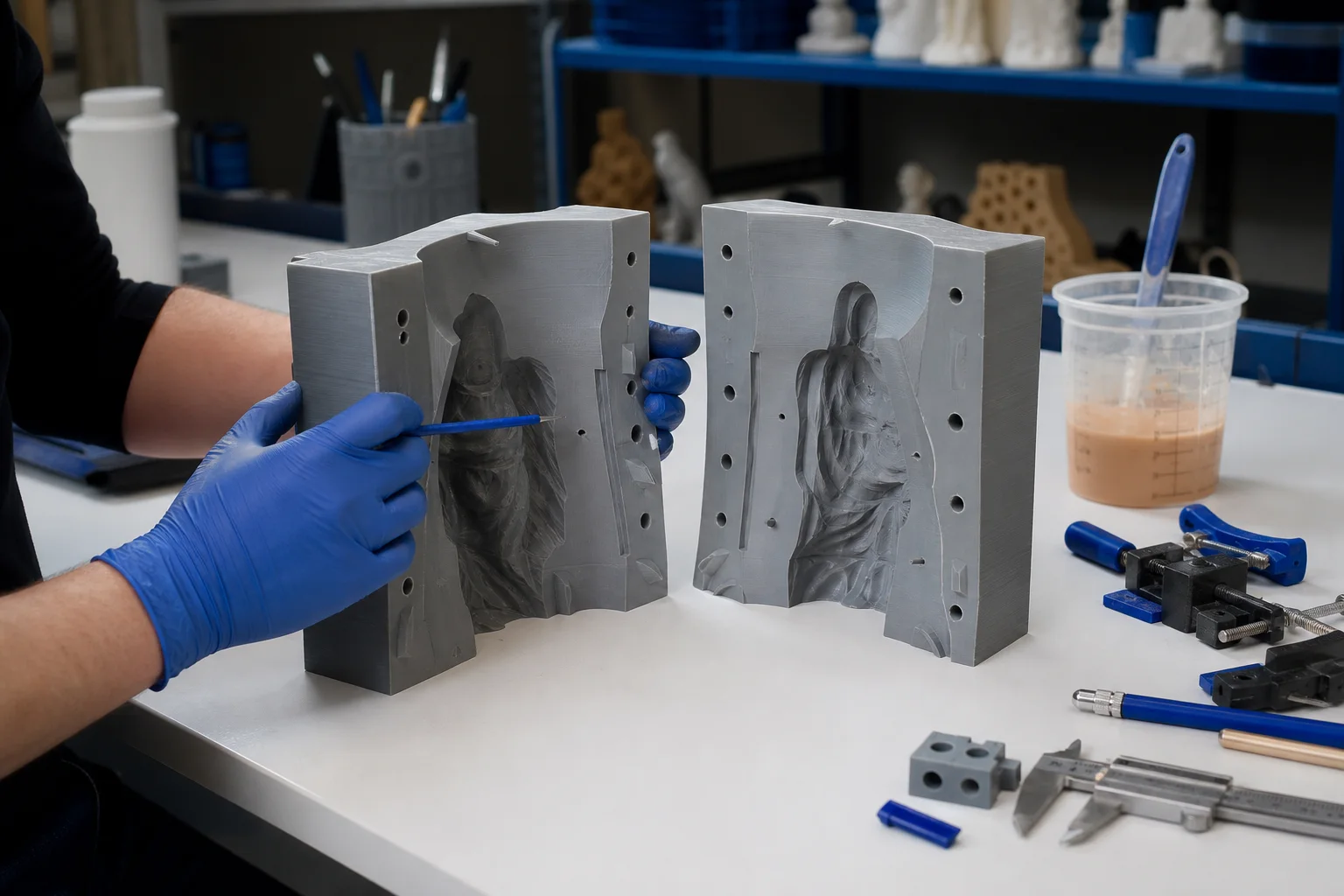
Parting lines, vents, release strategy, surface, and the master pattern must be ready before the first pour.
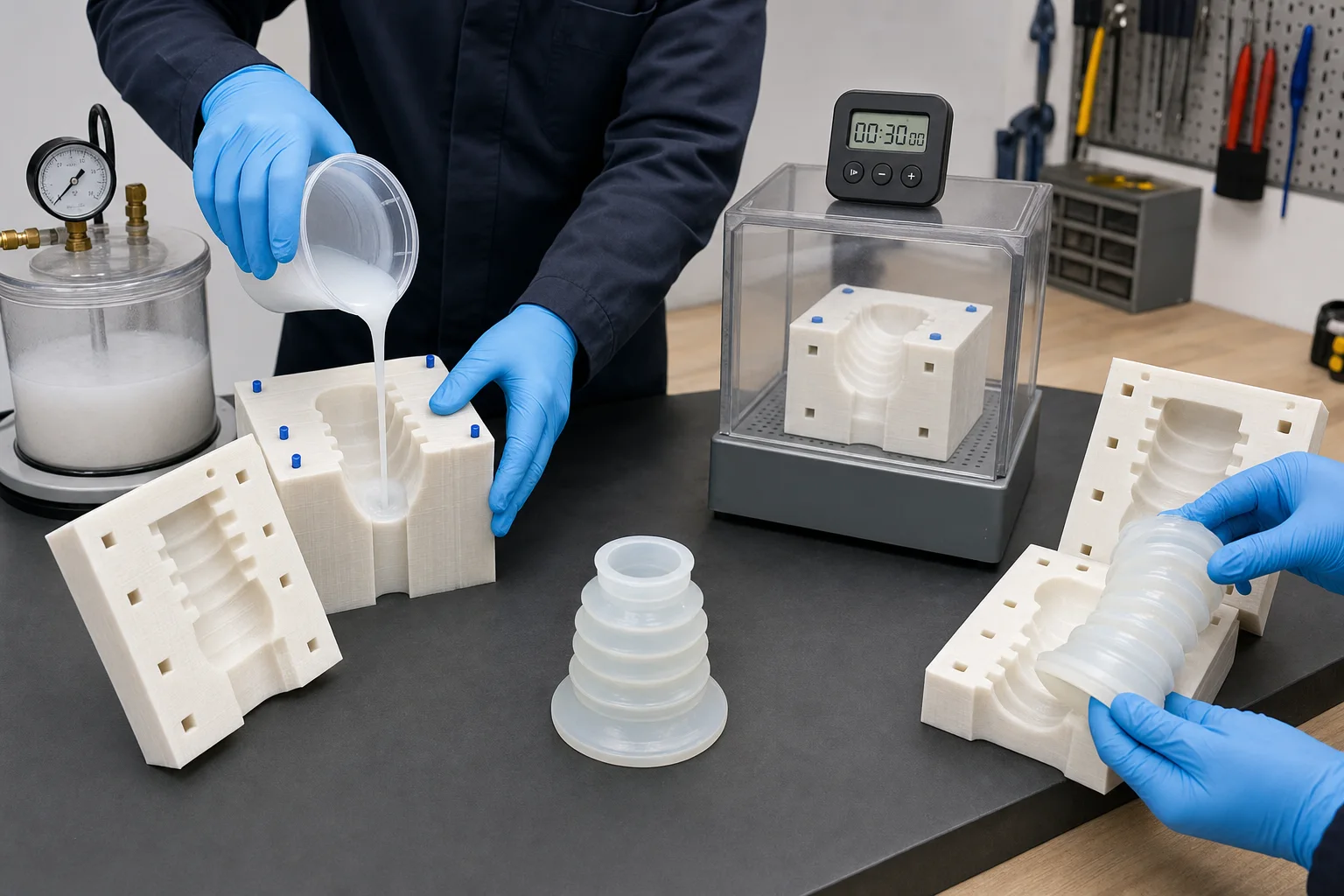
Each cycle needs about 6–8 hours to fully cure. Fewer molds can lower cost, but more cycles can extend lead time.
A 3D-printed mold and the master pattern are separate cost items. Geometry, size, split, vents, and surface finish determine the work involved.
Plan around a one-litre minimum of silicone for an initial estimate. Custom colors and extra material for runners, vents, and waste affect the quote.
More molds can run more parts in parallel and shorten the schedule. Fewer molds usually lower tooling cost but require more 6–8 hour pouring cycles.
A typical silicone-casting project is around 7 days, including a few days for making the mold and master pattern. The final schedule is confirmed after reviewing the geometry, quantity, material, color, and finish.
Undercuts, thin walls, deep cavities, parting lines, draft, and trapped air affect whether the mold can release the part cleanly.
Hardness, tear resistance, flexibility, temperature, chemical exposure, and compression set should match the real use.
The printed mold surface, seam, vent marks, color, and any embedded insert should be agreed before the mold is released.
If the part or mold is not ready, start with 3D design. We can help clarify the split, vents, release, and the manufacturing route before casting.
Yes, for suitable short-run applications. Mold geometry, print material, surface, release strategy, vents, and silicone behavior must be reviewed first.
Send the part CAD or drawing, target quantity, silicone hardness or behavior, finish, color, critical dimensions, inserts, and intended use.
No. Silicone casting uses a liquid silicone system and a different tool and process from heated-plastic injection molding.
The 3D-printed mold, master pattern, silicone volume, color, number of molds, and finish all affect the estimate.
Around seven days is typical, including mold and master-pattern work. Each pour needs about 6–8 hours to cure; fewer molds can lower cost but extend the schedule.
A one-litre minimum is a useful planning baseline. The actual quantity depends on the cavity, runners, vents, waste, and number of pours.
Use these starting points to choose a service. The final quotation is confirmed after we review geometry, material, quantity, finish, tolerances, and delivery requirements.
The 3D-printed mold and master pattern are priced from the geometry, size, and preparation required.
Quoted after geometry reviewSilicone volume, color choice, and the number of molds directly affect cost and lead time. Fewer molds lower cost but extend the schedule.
Quoted from the production planPlanning is around seven days; each pour normally needs 6–8 hours to cure fully.
Confirmed with your mold planPrices are planning references, not a binding offer. We will confirm the scope, tax, delivery, and any revision or finishing work before production.
We accept customer files throughout Thailand and ship completed parts nationwide by parcel. Shipping within Thailand starts at THB 100; the final amount depends on packed weight, parcel volume, and destination.
Pickup is available at our Pak Kret workshop by appointment. For workshop consultation, drop-off, or collection in Pak Kret, notify us by phone or LINE Official Account, or schedule an appointment before visiting.
Onsite work is available for applicable services after project review; travel is quoted by distance and project scope.
Maliev Co., Ltd.
Business hours
Monday-Friday: 09:00-18:00
Saturday-Sunday: Closed
Send the geometry, quantity, material behavior, and intended use for a practical casting review.